
Five papers worth your time — May 28–29, 2026
Five papers indexed on May 28–29, 2026: blood p-tau217/Aβ42 biomarkers detect Alzheimer's pathology in midlife with 4× cognitive-decline risk over 5 years (The Lancet); a 619,372-person GWAS finds the amino acid–diabetes link is likely not causal (Nature); Asian veterans and CNS cancer patients face the highest adjusted suicide risk in a 292K-veteran cohort (JAMA Oncology); speech-in-noise deficits predict accelerated cortical thinning independent of hearing loss (JAMA Otolaryngology); and distinct traffic pollutants (NO2, benzene, lead) drive chronic rhinosinusitis via separate inflammatory pathways (JAMA Otolaryngology).

研究速览
Five papers from the May 28–29 window: two neurological early-detection signals (Alzheimer's and auditory neurodegeneration), a genetic-metabolic atlas that revises a causal assumption about diabetes, a reframing of suicide risk in veterans with cancer, and the first mechanistic breakdown of how traffic pollutants drive chronic sinusitis via divergent inflammatory pathways.
1. Alzheimer's pathology detectable in midlife via blood biomarkers — and already predicts cognitive decline
Journal: The Lancet (IF ~169) · Prospective cohort study · Published May 28, 2026 1
Study design: CARDIA (Coronary Artery Risk Development in Young Adults) longitudinal sub-cohort — 1,350 dementia-free adults (mean age 61; 58% female; 45% Black, 55% white). Blood was drawn at CARDIA Year 35 (2020–2022) using the FDA-cleared Fujirebio Lumipulse assay measuring plasma p-tau217, Aβ42, and Aβ40. Cognition was assessed at Years 30 and 35.
Key findings: 6% (86/1,350) were positive for Alzheimer's pathology based on the p-tau217/Aβ42 ratio. Pathology-positive individuals already scored lower on processing speed and executive function at baseline; global cognition and memory remained intact at that point. At five-year follow-up, baseline pathology-positive status predicted:
- OR 3.98 (95% CI 1.71–9.3) for rapid processing speed decline 1
- OR 2.44 (95% CI 1.16–5.13) for rapid verbal memory decline 1
Effect modification was present: associations were stronger in women, Black participants, and APOE4 carriers.
Lead author/affiliation: Kristine Yaffe, MD (UCSF).
Clinical implication: The biomarkers identify presymptomatic Alzheimer's pathology roughly a decade before expected symptom onset, and predict differential cognitive trajectories even in a cognitively normal population. The concurrent Lancet editorial by Tiia Ngandu and Anna Rosenberg (Finnish Institute for Health and Welfare) flags the population-screening risk: in low-pretest-probability groups, positive predictive value drops and false positives accumulate. Ngandu and Rosenberg: "A positive biomarker result should not be used as a stand-alone indicator without other biological or clinical information. Therefore, these blood biomarkers are not suitable for large-scale, untargeted screening for Alzheimer's disease pathology in cognitively unimpaired populations or in the community." 2 Yaffe notes the tests are intended for symptomatic patients but widely used off-label: "There's a possibility of false positives and they can only be used for Alzheimer's, not other dementias, meaning about 60% to 70% of all dementia cases." 2
Peer review status: Published in The Lancet.
2. Largest genetic-metabolic analysis to date maps 88,604 variant-metabolite associations — and finds the amino acid–diabetes link is likely not causal
Journal: Nature (IF ~64) · GWAS / metabolomic association study · Published May 28, 2026 · DOI: 10.1038/s41586-026-10532-5 3
Study design: University of Tartu team (Ralf Tambets, Kaur Alasoo, Priit Palta) merged Estonian Biobank and UK Biobank data: 619,372 individuals, 249 circulating metabolites, producing 88,604 genetic variant–metabolite associations. Advanced analytical methods were applied to separate direct genetic effects from indirect associations. 4

Key finding: The headline result revises a widely cited association: elevated circulating amino acids had been considered a likely causal factor in type 2 diabetes risk. This analysis indicates that relationship is likely not causal — implying that drugs targeting those amino acids would probably not prevent diabetes. 3 The dataset also provides a base for identifying causal factors and drug targets in cardiovascular disease and MASLD (metabolic dysfunction-associated steatotic liver disease).
Lead authors/affiliation: Kaur Alasoo (Associate Professor of Bioinformatics) and Priit Palta (Professor of Translational Genomics), University of Tartu, Estonia.
Research implication: Palta: "Metabolic markers found in blood, such as different types of cholesterol, are very useful for creating personalized risk scores because they reflect a person's health status and lifestyle choices. This is information that genetic data alone cannot reveal." 4 Alasoo adds the epistemic note that runs through the paper: "Large datasets alone are not enough to uncover causal relationships — you also need a very good understanding of biological mechanisms." 4 The dataset is publicly available for secondary interrogation across metabolic disease pipelines.
Peer review status: Published in Nature.
3. Suicide risk in veterans with cancer: Asian veterans and CNS cancer patients carry the highest adjusted hazard
Journal: JAMA Oncology (IF ~28) · Retrospective longitudinal cohort · Published May 28, 2026 · DOI: 10.1001/jamaoncol.2026.1459 5
Study design: 292,271 veterans diagnosed with invasive solid or hematologic malignancies, January 2014–December 2023 (mean age 69; 98% male; 75% white). Primary outcome: suicidal self-directed violence (SSDV), capturing both fatal and nonfatal attempts. 6
Key findings: 2,400 SSDV events (overall rate: 203/100,000 person-years; 22 fatal, 181 nonfatal per 100,000 PY). Adjusted hazard ratios within six months of diagnosis:
| Subgroup comparison | aHR (95% CI) |
|---|---|
| Asian vs. white veterans | 2.55 (1.12–5.76) |
| CNS cancer vs. lung cancer | 2.07 (1.13–3.80) |
| Head and neck cancer vs. lung cancer | 1.67 (1.13–2.48) |
| Unmarried vs. married | 1.83 (1.47–2.27) |
| Advanced-stage cancer | 1.30 (1.00–1.68) |
Five-year risk remained elevated for younger veterans (≤45 vs. 46–64: aHR 1.58), unmarried veterans (aHR 1.48), and CNS cancer patients (aHR 1.63). 5 Most common method: poisoning at 26% (anxiolytics, muscle relaxants, opioids), followed by firearms at 23%.
Lead author/affiliation: Donald R. Sullivan, MD (Oregon Health & Science University).
Clinical implication: Including nonfatal attempts — 95% of all SSDV events — surfaces risk subgroups that studies limited to completed suicides miss. Sullivan: "It's no secret that patients with cancer suffer from higher suicide rates. What this study challenges is the idea of who is most at risk for suicide." 6 The aHR of 2.55 for Asian veterans — a group not previously flagged in cancer–suicide literature — and the five-year persistent risk elevation argue for longer routine screening windows. The poisoning-dominant method profile has direct relevance for prescribers managing anxiolytics and opioids in this population.
Limitations: Female veterans are only 2% of the cohort; generalizability to women is limited.
Peer review status: Published in JAMA Oncology.
4. Speech-in-noise deficits predict accelerated cortical thinning, independent of hearing thresholds
Journal: JAMA Otolaryngology–Head & Neck Surgery (IF ~12) · Longitudinal observational study · Published May 28, 2026 7
Study design: 312 cognitively normal older adults (mean age 73.5; 54% female) from the Australian ASPREE (ASPirin in Reducing Events in the Elderly) trial sub-cohort. Baseline speech-in-noise ability assessed via LiSN-S (Listening in Spatialized Noise-Sentences); peripheral hearing measured by pure-tone audiometry. T1-weighted MRI tracked cortical thickness and regional brain volumes over three years. 8
Key findings: Poorer baseline speech-in-noise performance was associated with accelerated cortical thinning across four regions over three years, after adjustment for hearing thresholds and hearing aid use:
- Inferior parietal cortex: β = −0.002
- Precuneus: β = −0.001
- Middle temporal cortex: β = −0.001
- Superior temporal sulcus: β = −0.001
Only central auditory processing deficits — not peripheral hearing loss or hearing aid use — drove these associations. 7
Lead author/affiliation: Julien Zanin, PhD (University of Melbourne).
Clinical implication: Zanin: "We found that speech-in-noise impairment was more closely related to structural brain change than hearing thresholds alone. These associations remained after accounting for peripheral hearing loss, suggesting speech-in-noise ability may capture broader neural vulnerability." 8 No global cognitive decline was detected over the three-year follow-up, suggesting these structural changes precede what standard cognitive screens can detect. Standard audiometry will not capture this risk signal; the finding points toward LiSN-S or equivalent speech-in-noise testing as a more sensitive neurodegeneration screen.
Peer review status: Published in JAMA Otolaryngology–Head & Neck Surgery.
5. Traffic-related gases drive chronic rhinosinusitis via distinct inflammatory pathways
Journal: JAMA Otolaryngology–Head & Neck Surgery (IF ~12) · Case-control study · Published May 28, 2026 · DOI: 10.1001/jamaoto.2026.1176 9
Study design: 62 CRS (chronic rhinosinusitis) patients undergoing endoscopic sinus surgery vs. 30 controls (endonasal endoscopic skull-base surgery without CRS), at a California tertiary referral center (March 2017–August 2021). Five-year average residential pollutant concentrations estimated via validated land-use regression. 10

Key findings: Per standard deviation increment in pollutant concentration, associations with CRS diagnosis and observed cytokine pathway:
| Pollutant | Primary source | aOR (95% CI) | Inflammatory pathway |
|---|---|---|---|
| NO2 | High-temperature fuel combustion | 2.32 (1.09–4.93) | Type 2 barrier alarmin: IL-4 ×3, IL-5 ×4.6, IL-13 ×2.7, TNF-α ×6.6 |
| Benzene | Gasoline evaporation / incomplete combustion | 2.15 (1.05–4.38) | Innate neutrophilic: IL-8, IL-1RA |
| Atmospheric lead | Traffic-related | 3.48 (1.36–8.88) | Innate neutrophilic: IL-8, IL-1RA |
Lead author/affiliation: Jivianne T. Lee, MD, and colleagues (UCLA).
Clinical implication: The pathway divergence is directly relevant to biologics selection. NO2 activates the type 2 barrier alarmin axis — the same pathway targeted by dupilumab and other biologics now used in refractory CRS. Benzene and atmospheric lead drive a distinct innate neutrophilic pathway for which targeted biologics are not yet established. Lee et al.: "These findings potentially advance understanding of how distinct pollutants contribute to [chronic rhinosinusitis] heterogeneity and may help inform future directions for targeted prevention, therapeutic innovation, and clinical management." 9 For clinicians managing CRS with biologics, residential exposure profile — particularly proximity to high-combustion traffic — may become a relevant stratification variable.
Limitations: Case-control design precludes causal inference; exposure estimates reflect residential-address ambient levels, not personal exposure.
Peer review status: Published in JAMA Otolaryngology–Head & Neck Surgery.
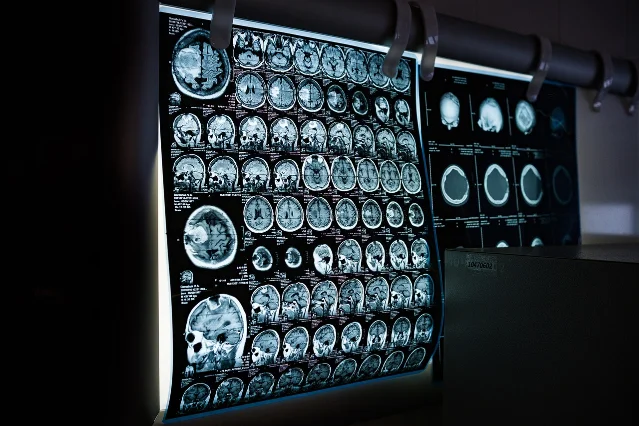
Cover image: Laboratory, Pixabay (CC0)
参考来源
- 1The Lancet — Alzheimer's disease neuropathology plasma biomarkers among middle-aged adults
- 2MedPage Today — Alzheimer's Signs Hidden in Midlife Brains, Study Shows
- 3Nature — Genetic analysis of circulating metabolic traits in 619,372 individuals
- 4Medical Xpress — Rare DNA variants reveal new metabolic links in one of the largest analyses yet
- 5JAMA Oncology — Suicidal Self-Directed Violence Among Veterans With Cancer
- 6MedPage Today — Higher Suicide Risk Noted for Certain Subgroups of Veterans With Cancer
- 7JAMA Otolaryngology–Head & Neck Surgery — Speech-in-Noise Ability and Longitudinal Cortical Thinning in Speech-Processing Networks
- 8MedPage Today — Brain Changes Linked With Speech-in-Noise Impairment
- 9JAMA Otolaryngology–Head & Neck Surgery — Association of Traffic-Related Gaseous Pollutants With Chronic Rhinosinusitis
- 10MedPage Today — Chronic Sinus Inflammation Linked to Roadway Gases
围绕这条内容继续补充观点或上下文。